
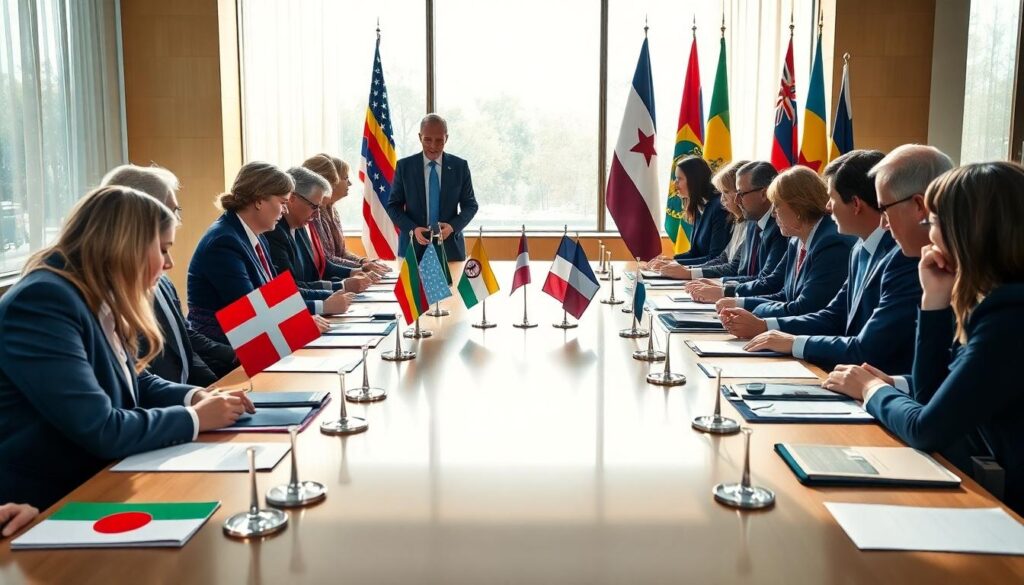

In a world where borders blur and everything’s just a click away, global affairs have become the ultimate hot topic. It’s not just about politics or economics—it’s about understanding how every little action can create a ripple effect across the globe. From climate change to international trade, global affairs shape the way nations interact, and let’s be honest, it’s like a never-ending soap opera with plot twists that would make even the best screenwriters jealous.
Understanding Global Affairs
Global affairs represents a comprehensive field that involves the interactions among nations, organizations, and individuals across multiple dimensions. Politics, economics, and social issues intersect to create a dynamic landscape with far-reaching consequences. Factors such as environmental challenges and global health crises demonstrate how interconnected actions influence outcomes.
International relations focus heavily on diplomacy, trade negotiations, and conflict resolution. Countries collaborate through treaties and alliances to address shared goals and challenges. Climate agreements illustrate how nations strive to mitigate environmental impacts collectively.
Human rights advocacy also plays a crucial role within global affairs. Organizations monitor and report violations to advance protections internationally. Efforts aim to establish norms that bind nations to uphold fundamental rights, promoting equality and justice.
Trade policies significantly shape economic relations among countries. Tariffs impact imports and exports, influencing prices and availability of goods. Economic partnerships foster growth and stability through collaboration in various sectors.
Cultural exchanges enrich global affairs. Art, literature, and education facilitate understanding between diverse populations. These interactions contribute to building mutual respect and tackling stereotypes, enhancing peaceful coexistence.
Technological advancements drive connectivity and information sharing globally. Social media platforms enable rapid dissemination of news and mobilization of movements. This rapid exchange of information highlights the importance of staying informed about global issues, shaping public opinion, and influencing policy decisions.
Engagement in global affairs requires awareness of these interconnected elements. Active participation fosters collaborative solutions to pressing global challenges. Understanding the nuances of global affairs equips individuals, organizations, and governments to navigate the complexities of an ever-evolving world.
Key Components of Global Affairs

Global affairs encompass several critical components. Each plays a vital role in shaping the interactions and relationships among nations and organizations.
International Relations
International relations encompass the diplomatic and political interactions between countries. They shape foreign policies and influence how states approach global issues. Cooperation often arises through treaties and alliances that enable nations to address common challenges effectively. Furthermore, diplomacy serves as a means to resolve conflicts, fostering peace through dialogue rather than force. Various organizations, such as the United Nations, facilitate these interactions, creating platforms for discussion and negotiation. Engagement in international relations allows nations to navigate complex global landscapes, ensuring that individual state interests align with collective goals.
Global Governance
Global governance refers to the structures and processes that manage international affairs. Collaborative frameworks emerge among states, intergovernmental organizations, and non-governmental organizations. They address transnational issues, such as climate change, security, and health crises. Global governance relies on shared norms and principles to guide actions and support policy implementation. Consequently, agencies like the World Health Organization play crucial roles during crises, coordinating responses and sharing resources. Through these systems, countries work together to tackle pressing global challenges, highlighting the importance of cooperation in maintaining international stability.
Economic Interdependence
Economic interdependence describes the mutual reliance of countries on trade and investment. Global trade networks establish connections among economies, allowing for the exchange of goods, services, and capital. Countries often develop specialized industries, benefiting from comparative advantages in specific sectors. Trade agreements, such as NAFTA and the EU, further facilitate these relationships by reducing barriers and enhancing cooperation. Moreover, economic interdependence means that fluctuations in one nation’s economy can impact others, emphasizing the need for synchronized policies. This interconnectedness fosters a greater understanding of global economic trends, driving collaboration to maintain prosperity.
Importance of Global Affairs
Global affairs significantly shape the strategies and decisions of nations in an interconnected world. Diplomacy, trade, and international collaboration all stem from understanding global dynamics.
Impact on National Policies
National policies often reflect the influence of global trends, such as economic shifts and climate concerns. Countries reformulate their regulations and practices to align with international agreements. Trade agreements promote economic growth, driving nations to adjust tariffs and quotas. Furthermore, social issues like human rights gain attention, prompting governments to adopt legislative changes influenced by international norms. Global events routinely inspire adjustments to defense strategies, showcasing how external pressures necessitate internal policy reevaluation.
Influence on Global Security
Global security emerges as a fundamental aspect of international relations. Collaborative treaties enhance the ability of nations to counteract terrorism and address transnational crime. Security alliances strengthen collective defense measures, as seen in the North Atlantic Treaty Organization (NATO). Furthermore, international diplomatic efforts focus on conflict resolution, diffusing tensions through dialogue. Cybersecurity also becomes a high priority, as nations increasingly confront vulnerabilities in digital infrastructure. Therefore, promoting peace and stability relies heavily on understanding and engaging with global affairs.
Current Trends in Global Affairs
Global affairs evolve daily, with trends shaping the international landscape. Presently, two fundamental areas draw significant attention: climate change and migration.
Climate Change and Sustainability
Climate change remains a pressing global issue. Countries prioritize initiatives aimed at reducing carbon emissions, fostering renewable energy adoption, and enhancing climate resilience. International agreements, such as the Paris Agreement, underline the necessity for collaborative actions. Nations invest in sustainable practices, which not only address environmental concerns but also stimulate economic growth. Urban planning incorporates green technologies to create more sustainable cities. Financial support for developing nations aids their transition to eco-friendly practices.
Migration and Human Rights
Migration trends also spotlight critical human rights issues. Conflicts and economic instability drive people to seek safety and better opportunities abroad. Governments face challenges balancing border security and humanitarian obligations. Policies often adapt to promote inclusive approaches that respect migrants’ rights. International organizations advocate for standards that protect vulnerable populations. Awareness improves regarding the plight of refugees, leading to grassroots movements aimed at supporting displaced individuals. Multilateral cooperation enhances efficiency in addressing the root causes of migration, creating pathways for sustainable solutions.
Global affairs play a vital role in shaping the world we live in today. They encompass a wide range of issues that affect nations and individuals alike. As countries navigate challenges like climate change and migration, the importance of collaboration and diplomacy becomes increasingly clear.
Understanding these dynamics allows for informed participation in discussions that impact global stability and human rights. The interconnectedness of economies and cultures highlights the need for thoughtful engagement in international relations. As global citizens, staying informed and active in these matters can lead to meaningful change and a more harmonious world.